
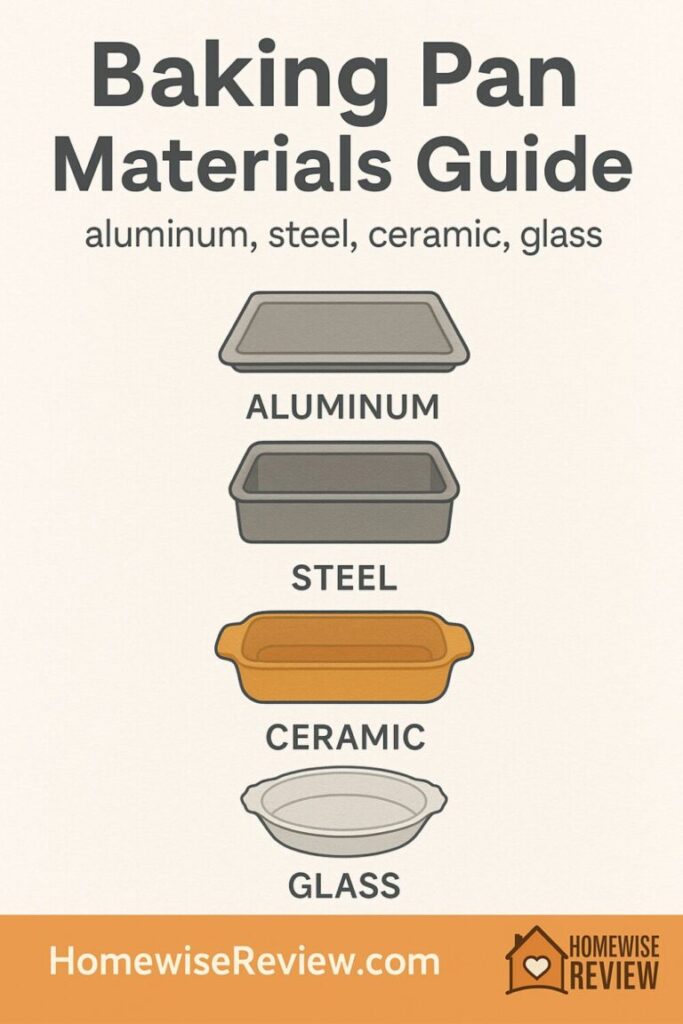
Who this is for: Home bakers and busy cooks who want even browning, fewer warped pans, and bakes that release without drama.Bottom line: Match the material to the job. Aluminum gives fast, even heat for cookies and cakes. Steel brings strength for breads and roasting. Ceramic and stoneware excel at slow, steady heat for casseroles and cobblers. Glass bakes evenly you can see, but it runs hot and keeps cooking after you pull it from the oven. Pick finish and thickness with intention and your results improve without buying a giant collection.
Find the ideal baking pan material for even cooking, reliable release, and lasting durability in your kitchen.
Quick comparison
| Material | Heat behavior | Best for | Watch outs |
|---|---|---|---|
| Aluminum (bare or anodized) | Fast, even, responsive | Cookies, sheet cakes, bars, muffins | Softer metal can dent; light color browns lighter |
| Steel (aluminized, carbon, stainless) | Slower to heat, strong, resists warping | Breads, pizza, roasting proteins/veg | Dark coatings brown faster; plain stainless can bake pale |
| Ceramic/stoneware | Slow, steady, great retention | Lasagna, cobblers, casseroles | Preheat gently, avoid thermal shock |
| Glass (borosilicate or soda-lime) | Slow to heat, holds heat after baking | Casseroles, pies you want to watch | Often needs lower temp or shorter time to avoid overbake |
Why owners like it
Bare and anodized aluminum heat quickly and evenly, so bottoms brown without burning while centers set. Light surfaces reflect heat, which helps delicate batters rise tall with soft crumbs. Reinforced rims stay flatter at high heat.
Best uses
- Rimmed half sheets for cookies, granola, and sheet-pan dinners
- Light-colored cake rounds and 9 x 13 pans for even rise
- Muffin tins for quick, consistent bakes
Keep in mind
- Acidic foods can spot bare aluminum. Line with parchment for tomato or citrus.
- Nonstick coatings on aluminum brown darker and release easily, but watch timing and avoid sharp tools.
Steel: strength for breads, pizza, and roasts
Types at a glance
- Aluminized steel: Steel core clad in aluminum for better heat transfer. A staple for loaf and muffin pans.
- Carbon steel: Durable, seasons with use, great for sheet-pan pizza and high-heat roasting.
- Stainless steel: Tough and pretty, but without cladding it can bake pale and warp more readily under shock heat.
Best uses
- Pullman and quick-bread loaves that need structure
- Dark, heavy pizza pans and roasting sheets that take a beating
- Broiler-safe jobs where aluminum coatings tap out
Keep in mind
- Dark steel finishes absorb heat. Start checking doneness a few minutes early.
- Some carbon steel pieces arrive with a factory coating you should wash off and season per maker guidance.
Nonstick on metal: when it helps and how to treat it
Why use it
Easy release for sticky batters and less greasing. Great for bar cookies, quick breads, and Bundts.
Care tips
- Skip knives and metal spatulas. Use silicone or wood.
- Hand wash. Harsh dishwasher cycles shorten life.
- Dark nonstick browns fast. Reduce oven temp by 15 to 25°F or check early.
Color matters
Light pans reflect heat and bake lighter. Dark pans absorb heat and bake deeper. Match color to what you want: pale sugar cookies vs caramel-edged brownies.
Ceramic and stoneware: gentle, even, and table-ready
Why owners like them
They warm slowly and radiate heat evenly, which suits custards, cobblers, strata, mac and cheese, and anything you want to stay warm on the table. Glazed interiors are easy to clean and do not react with tomato or citrus.
Best uses
- Lasagna and baked pasta that benefit from steady heat
- Fruit crisps and cobblers with syrupy edges
- Bread puddings and strata where carryover helps set the middle
Keep in mind
- Avoid sudden temperature swings. Bring a cold dish toward room temp while the oven preheats.
- Heavier walls mean longer preheat and a bit more carryover after you pull it.
Glass: see-through baking with strong carryover
Why owners like it
You can watch the bottom crust, which helps pies and casseroles. Glass holds heat, so side and bottom crusts keep cooking on the counter for a few minutes.
Best uses
- Pies when you want to verify a browned bottom
- Casseroles and baked eggs
- Brownies if you like crisp edges
Keep in mind
- Because glass retains heat, many cooks reduce oven temp by about 25°F or shave a few minutes to avoid dry edges.
- Avoid broilers and direct stove heat. And protect from thermal shock.
Thickness, rims, and warping
- Thicker gauge = more stable heat. Heavy-gauge aluminum and aluminized steel resist hot-spotting and stay flatter.
- Reinforced rims on sheet pans limit twist when you pull hot pans one-handed.
- Warping happens when a thin pan hits a very hot rack. It usually relaxes as temperature equalizes. To prevent it, do not preheat empty thin pans for long and avoid slamming cold liquid into a hot pan.
The small stuff that changes results
- Parchment creates insulation that evens bottoms. Great for cookies and sticky bars.
- Silicone mats release well but bake slightly lighter and softer. Good for tuile, meringue, and caramel work.
- Color signal: If a recipe notes a time for “light metal,” reduce a touch for dark pans or glass.
- Edges and corners: Straight-sided cake pans rise truer than flared, and sharp corners in brownie pans create those chewy edge pieces people fight for.
What to buy first: a tiny, mighty set
- 2 light-colored aluminum half sheets plus 2 wire racks that fit inside
- 1 light 9 x 13 metal pan for cakes and bar cookies
- 2 straight-sided 8 or 9-inch cake rounds
- 1 aluminized steel loaf pan
- 1 ceramic or stoneware 3-quart casserole
- 1 glass pie plate if you bake pies and want to see the crust color
That mix covers cookies, cakes, lasagna, brownies, roasts, quick breads, and pies without clutter.
Care and upkeep by material
Aluminum and steel
- Hand wash with warm water and mild soap.
- For sticky caramel or cheese, soak briefly.
- Avoid metal tools on nonstick and skip the dishwasher on coated pans.
Ceramic and stoneware
- Let cool before washing.
- Soak and use a nylon scraper for baked-on bits.
- Check maker guidance for dishwasher use. Many prefer hand wash to protect glaze.
Glass
- Cool before washing to prevent shock.
- Avoid broilers and direct flame.
- Use non-abrasive pads to keep it clear.
Troubleshooting
- Pale bottoms on cookies: Use a darker pan or move the rack down one notch. Skip silicone mats and switch to parchment.
- Burnt edges, raw middles: Pan too dark or too thin for the recipe. Lower temp 15 to 25°F and extend time, or swap to light aluminum.
- Cakes doming hard: Rack too high or pan color too dark. Lower the rack and use light metal.
- Warping on sheet pans: Use heavier gauge, avoid empty preheats, and place pans into the oven once preheated.
Final Thoughts
Materials are tools, not trophies. Keep light aluminum for cookies and cakes, sturdy steel for breads and roasting, ceramic or stoneware for steady casseroles, and glass when you want to see crust color and do not mind extra carryover. Choose pan color and thickness with intention, line when it helps, and avoid thermal shock. With a small, well-chosen kit, you will bake more consistently with less fuss.
See also
For precise measuring in baking, see our guide to kitchen scales for accurate baking, which complements essential pan material choices. After mastering pans and scales, explore the nonstick pan care checklist to maintain your bakeware effectively. – Discover the advantages of a stylish and functional mixer in our Smeg 50s retro stand mixer review. – Prepare your ingredients efficiently by finding the right tools in the best kitchen scissors for baking prep. – For a cozy kitchen setup, check out the best coffee machines for small kitchens to complement your baking routine.FAQs
What is the single best sheet pan material for cookies
Light-colored, heavy-gauge aluminum. It heats evenly and releases well with parchment.
Do dark nonstick cake pans need different times
Usually yes. They absorb more heat, so reduce the oven temp by 15 to 25°F or start checking earlier.
Glass or metal for brownies
Both work. Metal gives crisper edges and a more even rise. Glass runs hotter on the edges and keeps cooking after the oven, which can mean darker sides if you do not adjust.
Can I roast on nonstick sheet pans
You can, but high heat and metal spatulas shorten coating life. For frequent roasting, use heavy aluminum or aluminized steel and a splash of oil.
Are ceramic and stoneware safe for broilers
Most are not. They prefer steady oven heat. Check maker guidance and keep them away from direct flame or broiler elements.
Affiliate Disclosure
If you purchase through links on our site, we may earn a small commission at no extra cost to you.