

Calms treatment dryness overnight without greasiness; try applying thin layers around your retinoid to reduce flaking.
We may earn a small referral fee
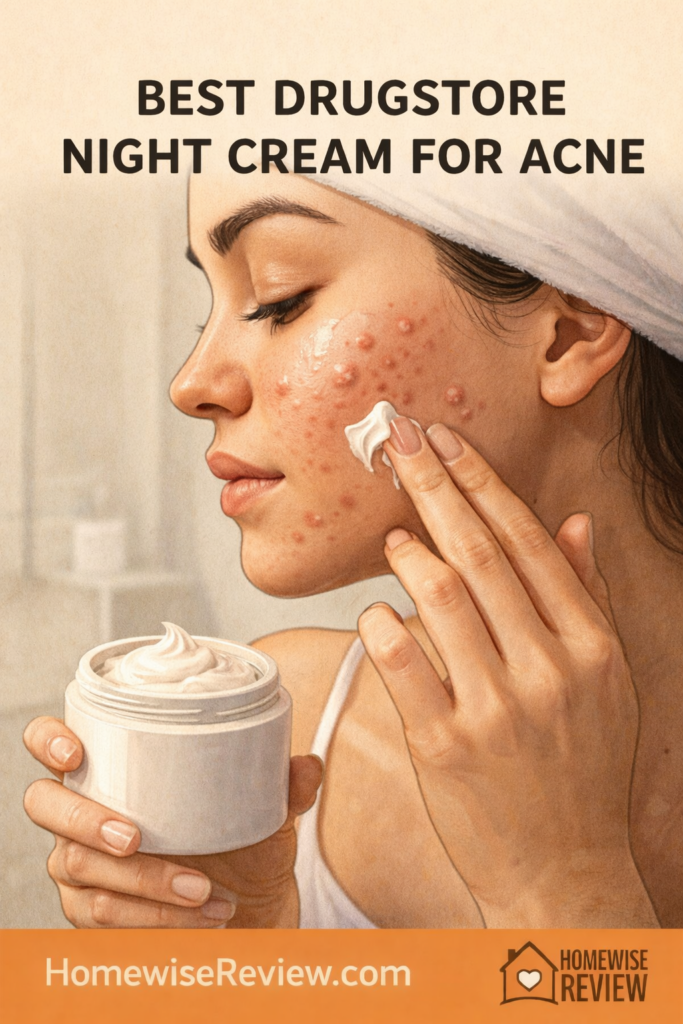
Acne-friendly night creams have to walk a tightrope: rich enough to stop flakes and irritation, but light enough to avoid clogged pores and shiny wake-ups. These drugstore picks get the balance right, especially if you use retinoids or benzoyl peroxide.
✨ 2026 Spotlight
2026 Spotlight: Acne-care shoppers are paying closer attention to barrier-supporting night moisturizers with ceramides, niacinamide, and fragrance-free formulas that sit comfortably over adapalene or benzoyl peroxide. Differin Restorative Night Moisturizer, CeraVe PM Facial Moisturizing Lotion, and La Roche-Posay Toleriane Double Repair Face Moisturizer (Oil-Free) still fit that need well, especially for layering in thin passes to curb overnight peeling. If your skin swings between breakouts and dehydration, lightweight gel-creams and lotion textures remain especially worth a look this year.
In-depth Reviews
Differin Restorative Night Moisturizer
- Noticeably calms dryness from acne treatments
- Absorbs fast without a heavy, occlusive feel
- Layers well over actives without pilling
- May feel a bit light for severely compromised barrier days
- Can sting briefly if your skin is extremely over-exfoliated
CeraVe PM Facial Moisturizing Lotion
- Comfortable, weightless feel for oily or combo skin
- Reduces tightness without cloggy heaviness
- Easy to use nightly with most acne actives
- Not rich enough for heavy peeling phases
- Can pill if layered over very silicone-heavy serums
Vanicream Daily Facial Moisturizer
- Very low irritation profile for reactive skin
- Hydrates without a slick, shiny layer
- Plays well with prescription acne treatments
- May not be enough on its own for very dry skin
- Texture is plain, not “luxury” feeling
Neutrogena Hydro Boost Gel-Cream (Fragrance-Free)
- Quick-absorbing hydration for oily, dehydrated skin
- Comfortable under stronger acne actives
- Leaves a clean finish that does not feel heavy
- Not as barrier-repairing as ceramide-heavy creams
- Can feel a little light in cold, dry weather
La Roche-Posay Toleriane Double Repair Face Moisturizer (Oil-Free)
- Good comfort-to-lightweight balance
- Helps skin feel less reactive over time
- Works well night or day without greasiness
- Can feel slightly rich on very oily T-zones
- Price can be higher than basic drugstore options
Buying Guide
Pro Tip: The “Sandwich” Method That Helps Retinoids Feel Less Brutal
If your acne treatment is a retinoid (like adapalene) and you keep quitting because of dryness, try moisturizing in two thin layers instead of one thick one. Apply a light layer of night cream to damp skin, wait until it feels mostly absorbed, then apply your retinoid, and finish with a second small layer of moisturizer on the areas that peel (often corners of the mouth, sides of the nose, and chin).
This approach keeps the treatment on your skin but reduces that raw, tight feeling that can trigger over-washing, over-exfoliating, or picking. If you still peel, do not “power through” by adding more actives. Drop to every other night for a week, then ramp back up once your skin feels comfortable again.
Also, keep your night cream amount realistic: a nickel-size blob for the whole face is usually plenty. Overapplying can leave a film that feels like sweat overnight, which some acne-prone people interpret as “clogging,” even if the formula itself is fine.
💡 Editor’s Final Thoughts
Final Verdict: Differin Restorative Night Moisturizer is the top drugstore night cream for acne if you want dependable hydration that plays well with common acne treatments and leaves skin calmer by morning. If nearly everything stings or breaks you out, Vanicream Daily Facial Moisturizer is the simplest, lowest-drama backup.
See also
If you are using prescription or OTC actives and your face feels tight or reactive, start with our guide to skincare for people on acne treatments, then layer in treatment slowly with help from our gentle retinols for total beginners roundup.
- Best facial washes for acne-prone skin
- Under-$15 picks for oily, congested skin
- Paula’s Choice 2% BHA Liquid Exfoliant review
Frequently Asked Questions ▾
What should I look for in a drugstore night cream for acne?
Prioritize “non-comedogenic” formulas that focus on barrier support: ceramides, glycerin, hyaluronic acid, and niacinamide. If you are already using acne actives, avoid stacking extra strong acids in your moisturizer, since that can backfire with irritation and more breakouts.
Is a thicker night cream bad for acne?
Not automatically. Some acne-prone skin needs richer texture to prevent dryness from retinoids or benzoyl peroxide. The bigger issue is whether the formula feels occlusive on your skin or triggers closed comedones. Patch test and give it 1 to 2 weeks.
Can I use salicylic acid at night and still use a night cream?
Yes. Apply salicylic acid first (on clean, dry skin), let it absorb for a minute or two, then apply your night cream. If you are also using a retinoid, consider alternating nights to keep irritation down.
Why does my acne look worse when I start moisturizing more?
Sometimes it is timing, not the moisturizer. Introducing multiple new products at once can cause breakouts that are hard to trace. Start with one night cream for 7 to 10 days, use a pea-size amount, and keep the rest of your routine steady.
Should I use a separate spot treatment at night?
If you tolerate it, yes, but keep it targeted. Apply your spot treatment to active pimples only, then use night cream everywhere (including over the spot treatment if dryness is an issue). If you get peeling, spot treat less often rather than quitting moisturizer.
As an Amazon Associate, we earn from qualifying purchases made through links on our site.