

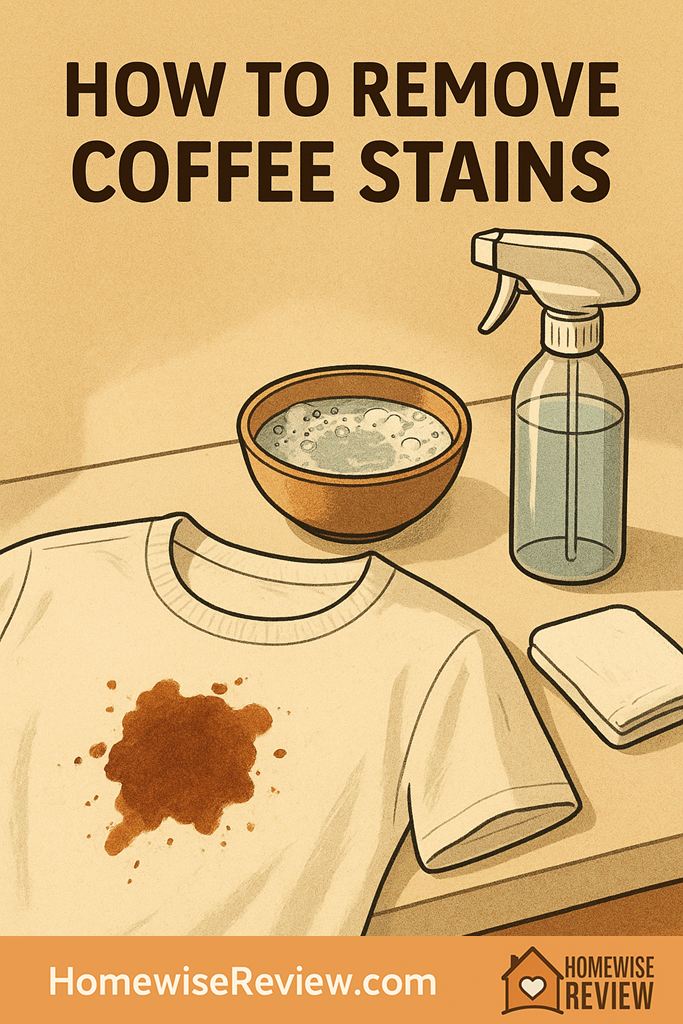
Coffee spills happen at the worst times, and the brown mark can set fast. Use the right cleaner and technique for your fabric or surface to lift the stain without spreading it or bleaching the color.
Coffee stains are a mix of brown dyes (tannins) and, often, milk fats and sugar. That means the fastest fix is not “scrub harder,” it is using the right steps in the right order for the surface you spilled on.
Start with gentle blotting, then choose a cleaner that matches your stain (black coffee vs. latte) and your material (cotton vs. wool vs. stone). The goal is to dissolve and lift the coffee without pushing it deeper.
Before you start: identify the stain in 20 seconds
Two coffee stains can behave very differently. A plain black coffee drip usually responds to water and detergent, while a latte or sweetened coffee often needs extra degreasing and more thorough rinsing.
Quick checklist
- Fresh or dried? Fresh stains lift faster; dried stains need dwell time and sometimes soaking.
- Black coffee or with milk/cream? Milk adds fats and proteins, which can cling to fibers.
- Sugar or syrup? Sticky residues can re-brown and attract dirt if not rinsed out.
- What surface? Carpet and upholstery need low moisture; stone may be damaged by acids like vinegar.
- Any “do not use” warnings? Check garment care labels and carpet fiber type (wool and some dyes are sensitive).
Quick coffee stain first aid (fresh spills)
If the spill is still wet, speed matters. Your first job is to remove as much liquid as possible without rubbing it deeper into fibers.
For fabric, carpet, and upholstery
- Blot immediately with clean paper towels or a white cloth. Press firmly, lift, and repeat. Do not scrub.
- Work from the outside in to keep the stain from spreading.
- Flush from the back (for clothing) with cool water, pushing the coffee out of the fibers instead of through them.
- Keep it damp until you can treat it if you cannot wash right away. A dried coffee spot is harder to remove.
For hard surfaces (countertops, tile, sealed wood)
- Wipe up the spill.
- Wash with a few drops of dish soap in warm water.
- Rinse with clean water and dry, especially on wood to prevent swelling or dull spots.
What to use: a simple coffee-stain solution chart
The best “coffee remover” depends on what is in the coffee and what material is stained. Use this chart to pick the mildest option that can do the job.
| Cleaner | Best for | How to use | Watch-outs |
|---|---|---|---|
| Cool water flush | Fresh black coffee on washable fabrics | Rinse from the back of the stain, then detergent | Less effective on dried stains or sugary coffee |
| Dish soap + water | Latte/cream coffee on fabric, carpet, upholstery | Mix a few drops into water; blot and rinse | Too much soap leaves residue that attracts dirt |
| White vinegar (diluted) | Dried coffee on many fabrics and carpets | Lightly apply, blot, then rinse well | Avoid on natural stone; test dyed fabrics first |
| Oxygen bleach soak | Set-in coffee on colorfast, washable fabrics | Soak 1 to 6 hours per label; then wash | Not for wool, silk, or leather; follow label directions |
| 3% hydrogen peroxide (spot test) | Stubborn coffee on white or very colorfast fabrics | Apply briefly, blot, rinse; repeat as needed | Can lighten dyes; never use without testing first |
How to remove coffee from clothes
Clothing gives you the biggest advantage: you can flush and fully rinse the fibers. The biggest mistake is heat. If you dry the item before the stain is out, you can lock the discoloration in.
Machine-washable cotton, polyester, and blends (fresh stain)
- Rinse from the back of the stain with cool running water for 30 to 60 seconds.
- Pre-treat with liquid laundry detergent or a few drops of dish soap. Gently work it in with your fingers.
- Wait 5 to 10 minutes (keep it damp).
- Wash using the warmest water safe for the fabric (check the care label).
- Air-dry and check before using the dryer. If any shadow remains, treat again.
For coffee with milk or cream
Milk adds fats and proteins that can cling to fabric. Dish soap often outperforms laundry detergent at this stage because it is designed to cut grease.
- Rinse with cool water.
- Apply 2 to 3 drops of dish soap directly to the stain, plus a splash of water.
- Gently rub fabric against itself to create light suds.
- Rinse thoroughly, then wash as usual.
For dried or set-in coffee stains (most washable clothes)
Dried coffee usually needs time, not force. Your goal is to rehydrate the stain, then lift it in stages.
- Soak the stained area in cool water for 15 minutes.
- Pre-treat with liquid detergent (or a detergent-water paste) and let it sit 10 to 15 minutes.
- Optional boost: soak in an oxygen bleach solution for 1 to 6 hours (follow the product label).
- Wash and air-dry to confirm removal before heat drying.
Whites and light colors: when to use peroxide
If a light shirt still has a yellow-brown shadow after washing, a brief peroxide spot treatment can help. Use only 3% hydrogen peroxide, and treat it like a dye: test first and do not leave it on for long.
- Spot test on an inside seam and wait 5 minutes.
- Dab a small amount onto the stain with a clean cloth.
- Wait 1 to 3 minutes, then blot and rinse thoroughly.
- Wash again and air-dry.
Delicates (wool, silk, “dry clean”)
For wool and silk, keep it gentle and avoid aggressive brighteners and long soaks. If the label says “dry clean only,” the safest move is blotting and professional cleaning.
- Blot with a dry white cloth.
- Dab with cool water mixed with a tiny amount of mild soap.
- Blot with plain water to rinse (do not saturate).
- Press with a towel to remove moisture, then lay flat to dry.
How to remove coffee from carpet
Carpet cleaning is a balance: enough solution to dissolve the coffee, but not so much that you soak the pad and create a lingering stain or odor. Always blot, rinse, and dry thoroughly.
Step-by-step: most synthetic carpets (nylon, polyester)
- Blot up as much liquid as possible with paper towels.
- Mix a gentle solution: 2 cups warm water + 1 teaspoon dish soap + 1 tablespoon white vinegar.
- Apply sparingly with a spray bottle or by dampening a cloth (do not pour).
- Blot with a clean cloth, switching to a fresh section as it picks up brown color.
- Rinse by blotting with plain water (this matters, or the spot can re-soil).
- Dry by pressing with a dry towel. Place a towel over the damp area with a heavy book on top for 30 minutes.
If the coffee stain is old or keeps coming back
- Repeat the cleaning cycle once.
- Use less solution and more blotting on the second pass to avoid over-wetting.
- Extend drying time with a fan aimed at the spot.
- If a light brown ring appears, it can be wicking from deeper fibers. Continue blotting and drying pressure until the area is fully dry.
Wool carpet and other sensitive fibers
Wool can shrink, felt, or lose dye if treated aggressively. Use cool water, minimal moisture, and skip peroxide and oxygen bleach unless you are certain it is safe for the fiber and dye.
- Blot, then dab with cool water plus a drop of mild soap.
- Blot with plain cool water to rinse.
- Dry quickly with towels and airflow.
How to remove coffee from upholstery and mattresses
Upholstery and mattresses stain easily because liquid sinks, but they also hate being soaked. Aim for repeated light applications and thorough drying.
Upholstery (couch, chair, car seat)
- Blot immediately with a clean cloth.
- Mix 1 cup lukewarm water with a few drops of dish soap.
- Dampen a cloth and blot the stain (avoid saturating the cushion).
- Blot with a cloth dampened with plain water to rinse.
- Press dry with towels and run a fan until fully dry.
Mattress
- Blot, then lightly mist the area with your soap-and-water mix.
- Blot repeatedly until transfer slows.
- Mist with plain water and blot again to rinse out soap and coffee.
- Cover the damp spot with a dry towel and press firmly, then air-dry with a fan for several hours.
How to remove coffee from hard surfaces
Most hard surfaces clean up easily, but some materials are sensitive to acids, abrasives, or lingering moisture. When in doubt, start with dish soap and water and move up only if needed.
Sealed wood tables and hardwood floors
- Wipe immediately, then clean with a lightly damp cloth and a drop of dish soap.
- Follow with a cloth dampened with clean water to remove soap residue.
- Dry right away to prevent a dull spot or raised grain.
Natural stone (granite, marble, quartzite)
Avoid vinegar on natural stone because acids can etch or dull the surface, especially on marble. Use a pH-neutral cleaner or mild dish soap instead.
- Wash with dish soap and warm water.
- Rinse and dry.
- If a shadow remains on porous stone, a poultice may be needed. Consider manufacturer guidance to avoid damage.
Tile and grout
- Wipe up, then clean with dish soap and warm water.
- For stained grout, scrub gently with a soft brush and a baking-soda-and-water paste.
- Rinse thoroughly to prevent a hazy film.
Mugs, travel lids, and carafes
- For brown buildup, soak in warm water with dish soap for 15 to 30 minutes.
- Scrub with a non-scratch sponge. Use a soft bottle brush for lids and crevices.
- Rinse well, especially around silicone seals where coffee oils can linger.
How to remove coffee from paper, books, and electronics (quick triage)
These situations are more about limiting damage than perfect stain removal. Move quickly and prioritize drying.
Paper and books
- Blot gently without rubbing.
- Place absorbent paper (paper towels or blotting paper) between pages and change it often.
- Fan pages open and let air circulate. Weight the book lightly once it is mostly dry to reduce warping.
Keyboards and electronics
- Power down and unplug immediately.
- Turn the device upside down to drain and blot around openings.
- Allow extended drying time before powering back on. If coffee contained sugar or milk, professional cleaning may be needed because residue can corrode or gum up parts.
Common mistakes that make coffee stains harder to remove
- Rubbing instead of blotting: pushes coffee deeper and frays fibers.
- Over-soaping: leaves residue that attracts dirt and makes the spot look darker later.
- Skipping the rinse: soap and coffee both need to be removed, especially on carpet and upholstery.
- Using heat too soon: dryers and hot irons can set remaining discoloration.
- Using vinegar on the wrong surface: avoid it on natural stone and be cautious on delicate dyes.
Bottom Line
For most coffee stains, fast blotting plus a small amount of dish soap and water will solve the problem, especially if you rinse well and avoid heat until the stain is gone. For dried stains, add dwell time and consider an oxygen bleach soak on colorfast, washable fabrics.
When the surface is sensitive (wool, silk, natural stone, electronics), use the gentlest method first and focus on controlled moisture and thorough drying.
See also
If you want a fast diagnosis for any spill, start with our stain-rescue decision tree, then borrow the same blot-and-rinse discipline used in this guide to removing red wine from carpet.
- How to remove pet stains from carpet (odor and wicking tips)
- Remove deodorant stains from shirts without damaging fabric
- How to remove hair dye stains from clothes (when you need stronger tools)
Frequently Asked Questions ▾
Does hot water remove coffee stains or set them?
For plain black coffee, warm water with detergent is often fine after an initial cool rinse. If the spill had milk or cream, start with cool water to avoid cooking proteins into the fibers, then wash in the warmest water the care label allows.
Can I use vinegar on coffee stains?
On many washable fabrics and synthetic carpets, diluted white vinegar can help break up dried coffee discoloration when used sparingly and rinsed out well. Avoid vinegar on natural stone (like marble and many granites) because it can etch or dull the surface.
Will hydrogen peroxide bleach my clothes?
It can. Even 3% hydrogen peroxide may lighten dyes, so always spot test first and limit contact time. It is generally safest for white or very colorfast items, and it should be rinsed thoroughly after a short treatment.
What if I already put the coffee-stained item in the dryer?
Do not assume it is permanent, but expect extra work. Rehydrate the stain, pre-treat with detergent, and try an oxygen bleach soak (if safe for the fabric), then wash again and air-dry to check progress before using heat.
How do I get rid of a lingering coffee smell in carpet or upholstery?
Odor usually means residue remains or the area stayed damp too long. Re-rinse lightly, blot as dry as possible, and speed drying with a fan. Once fully dry, a light layer of baking soda for several hours can help absorb odor, then vacuum thoroughly.
As an Amazon Associate, we earn from qualifying purchases made through links on our site.