

Smoothly diffuse eyeshadow edges for a polished, professional look with minimal effort.
We may earn a small referral fee
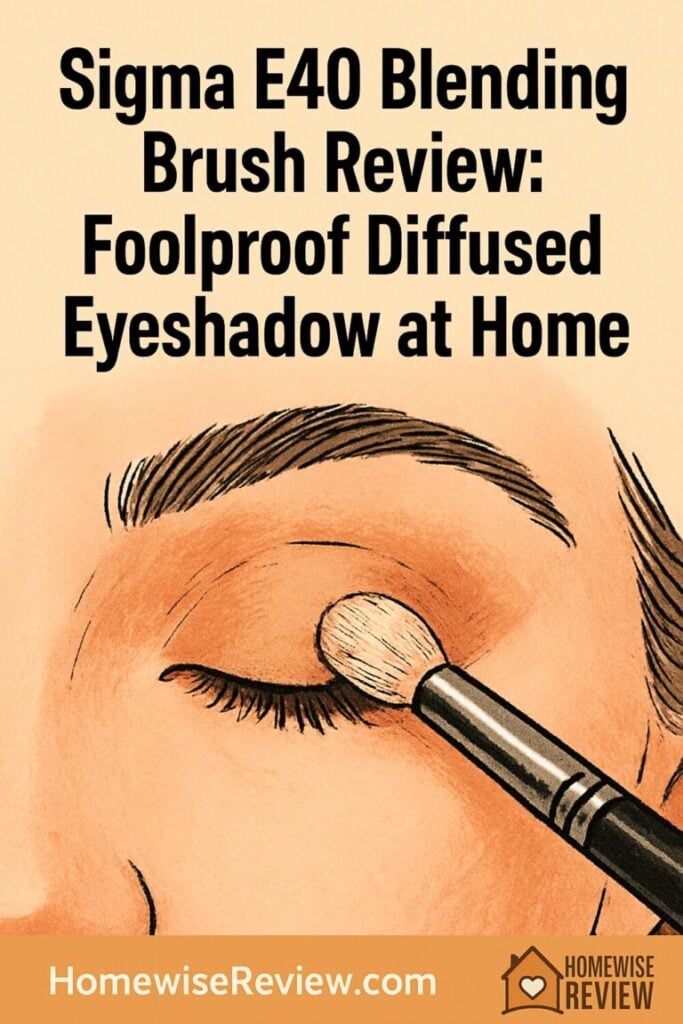
If blending is where your eye look falls apart, the Sigma E40 is the rare brush that makes soft, diffused edges feel almost automatic. Here is how it actually performs and how to use it for clean, professional results in minutes.
The easiest way to spot a polished eye look is by its edges. Smoothly blended transitions are what separate a rushed morning from an eye that looks intentional and finished. The Sigma E40 Tapered Blending Brush has a reputation for making that blend happen with minimal effort. After weeks of daily use across mattes, satins, and shimmers, here is a clear, practical review of how the E40 feels, what it does best, where it falls short, and how to get foolproof, diffused eyeshadow at home.
🆕 2026 Product Update
In 2026, the Sigma E40 Blending Brush remains a dependable pick for soft, even diffusion—especially if you want a seamless crease without overworking your shadow. Sigma’s lineup has expanded with newer eye brushes, but the E40’s shape and density still hold up for everyday blending and quick touch-ups. If you already own it, there’s little reason to replace it unless you’re specifically chasing a smaller tapered brush for tighter detail work.
Overview
The Sigma E40 is a fluffy, tapered blending brush designed to soften eyeshadow edges, apply transition shades, and create a diffused gradient through the crease. The brush head is full and airy rather than dense, with a rounded dome that tapers slightly at the tip. It uses modern synthetic fibers that are soft and resilient, and the bristles bounce back to shape after washing. The handle has a balanced weight that makes it easy to keep a light touch, which matters for blending without streaks.
In practice, the E40 excels at three everyday jobs: laying down a sheer wash of a transition shade, smoothing a slightly harsh crease line after a more precise brush has placed color, and buffing away any visible seams between lid and brow bone. It is a mid-priced, pro-leaning tool that slots in as the blending workhorse of a simple eye kit. If you want one brush that makes almost any powder look softer, this is the one that gives you that diffused, cloud-like blend.
Who it’s for
- Beginners who struggle with harsh lines. The E40’s fluffy shape makes it hard to over-apply pigment, so you build color gradually and avoid the muddy look.
- People who wear soft, daytime eyeshadow. If your goal is a quick wash of color and a clean blend, the E40 does the heavy lifting.
- Anyone with sensitive lids. The fibers feel gentle on the skin and don’t poke, even with circular motions.
- Those using highly pigmented mattes. The brush diffuses intense shades without skipping, which helps you control saturation.
It may not be ideal if you have a very small lid space or want sharp, defined crease work every day. The head is on the larger side for a crease brush, which is a strength for diffusion but a trade-off when precision is the priority. For detailed outer corner depth or cut-crease placement, you will want a smaller or flatter brush to place the color first, then reach for the E40 to soften the edges.
How it feels and performs
Softness and comfort: On the eyes, the E40 feels plush and gentle. The bristles glide without scratching, even over drier or textured skin. That matters if you have mature lids or you use retinoids and experience occasional dryness.
Pickup and payoff: Because the head is airy, it picks up a moderate amount of powder and disperses it evenly. With one dip, you get a whisper of color rather than a bold stripe. This is exactly what you want for transitions and blending, where control is everything. If you need more depth, it layers smoothly without catching.
Blend quality: The E40 excels at smoothing edges. Windshield wiper motions give soft gradients through the crease, while small circular motions melt one shade into another. It helps tone down patchiness from more intense pigments. On satins and shimmers, it is best used to blend the edges of a previously placed shade, not to pack shimmer onto the lid.
Powders vs creams: With pressed powder mattes and satins, the E40 is reliable and consistent. With cream or liquid formulas, the fluffy head can spread the product too thin and may splay. It can be used to soften a cream shadow that has already set, but it is not the ideal tool for applying creams in the first place.
Fallout and mess: The brush’s airy shape reduces fallout because it naturally deposits less product. Tap off excess, and you are set for a controlled application. If you pack the brush too heavily, it will still dust under the eye, but that is user error rather than a flaw.
Durability and care: The synthetic fibers rinse clean without staining heavily, and the head returns to shape after drying. During testing with weekly washes, there was no noticeable shedding. As with any quality brush, keep water away from the ferrule when washing and dry the brush with bristles facing downward or flat to maintain longevity and shape.
How to use for best results
The E40 is at its best when it is the second or third step in your process, not the first thing that touches a pan of deep shadow. Here is a quick routine that delivers soft, diffused eyes fast.
- Prime and set. Apply your eye base. If your base is very tacky, set the crease area with a touch of translucent powder so the E40 glides instead of grabbing.
- Start with a transition shade. Dip the E40 lightly into a matte transition color that is a couple of shades deeper than your skin tone. Tap off excess. With your eye open and looking slightly down into a mirror, sweep the color through the crease using windshield wiper motions. Keep your grip toward the end of the handle to lower pressure. Build slowly until you see a soft haze of color.
- Place depth with a smaller brush, then blend with the E40. Use a more precise brush to place a deeper shade on the outer corner or crease. Switch back to the E40, clean it on a towel, and diffuse the edge using small circular motions. The E40 should touch only the border of the color to keep your depth where you want it.
- Blur the edges. With the E40 clean, skim the upper edge of your shadow toward the brow bone. If you overdid it, pick up a bit of skin-tone powder on the E40 and use it as an eraser to soften without adding depth.
- Final pass. Before mascara, do one last light pass through the crease to ensure there are no lines of demarcation. Keep the pressure feather-light. If you can hear the bristles, you are pressing too hard.
Extra tips for specific eye shapes
- Hooded or deep-set eyes: Work slightly above your natural crease with your eyes open so the transition remains visible when your eyes are relaxed. Use the tip of the E40 rather than the full belly of the brush.
- Smaller lids: Pinch the bristles gently with your fingers to temporarily narrow the brush head for more precision. Release to blend more broadly.
- One-and-done shadow: Load the E40 with a mid-tone matte and sweep it across the lid and crease. Wipe the brush clean on a towel, then use it to soften the upper edge. The result is a quick, diffused wash with no patchy spots.
- Avoid muddy blends: Clean the brush on a dry towel between shades. If two formulas do not play well, lay down a thin veil of skin-tone powder and blend over that to buffer the mix.
Care and cleaning
- Wash weekly if you use the brush daily. Use lukewarm water and a gentle brush soap or mild cleanser.
- Keep water away from the ferrule. Rinse downward so water does not loosen the glue inside.
- Reshape the dome with your fingers and dry flat or bristles-down. A brush guard can help retain the taper while drying.
- Spot clean between uses by wiping across a clean microfiber towel or a brush-switch sponge.
Pros and cons
- Pros:
- Soft, airy bristles create a smooth, diffused blend without harsh edges.
- Beginner-friendly pickup that prevents over-application and fallout.
- Versatile for transitions, soft washes, and final blending passes.
- Synthetic fibers feel gentle and wash well without noticeable shedding.
- Balanced handle encourages a light touch for better control.
- Cons:
- Head size can be too large for very small lid space or highly detailed work.
- Not ideal for applying creams or packing shimmer onto the lid.
- Because it diffuses quickly, it can over-soften precise shapes if you are heavy-handed.
Final verdict
The Sigma E40 is a true blending specialist. If your goal is soft transitions and undetectable edges, it delivers that result with less effort and less risk of patchiness than a denser or smaller crease brush. It is not the tool for carving crisp lines or packing metallics, and those needs are better handled by a smaller shader or detail brush. As a daily workhorse for diffusing powder shadows, though, the E40 earns a place in even a minimal makeup kit. For most shoppers, it is the simplest path to foolproof, diffused eyeshadow at home.
See also
If you are piecing together a streamlined brush set, start by learning what each shape actually does in Makeup Brush Shapes Explained: what each brush is for. Then pair your E40 with an easy, everyday palette from our guide to the Best Neutral Eyeshadow Palettes for Grown-Up Daily Wear so your blending work looks cohesive and polished.
Want shades that make your eyes pop once you have the blend down? Choose colors that complement your eye color with these targeted picks: Best Eyeshadow for Hazel Eyes, Best Eyeshadow for Blue Eyes, and Best Eyeshadow for Brown Eyes.
FAQ
Is the Sigma E40 synthetic or natural hair, and how does that affect performance?
The E40 uses soft synthetic fibers designed to mimic the blend of natural hair while staying cruelty-free and easy to clean. Synthetic bristles tend to pick up a bit less product than traditional goat hair, which actually helps prevent harsh lines. The result is a controlled, gradual application that is ideal for transitions and smoothing edges.
Will the E40 be too big for small or hooded eyes?
The E40 is on the larger side for a crease brush, which is great for a diffused look but can feel big on small lids. To adapt it, work with the very tip of the brush, keep your eyes open while placing color slightly above the natural crease, and pinch the bristles for tighter control. For very precise work, you may want to place depth with a smaller brush, then return to the E40 to soften only the edges.
Can I use the E40 with cream or liquid eyeshadows?
You can use the E40 to soften the edges of a cream once it has set, but it is not the best tool for applying creams or liquids. The airy bristles tend to spread creams too thin and can splay. For creams, use a denser synthetic shader or your fingertip to place the product, then blend the borders with the E40 if needed.
How do I clean and maintain the E40 without ruining the shape?
Wash weekly if you use it daily. Use lukewarm water and brush soap, keeping water away from the ferrule. Rinse downward, reshape the dome with your fingers, and dry flat or bristles-down so water does not seep into the handle. A brush guard helps retain the taper while drying and extends the brush’s neat, domed shape.
Why does my eyeshadow look muddy when I blend with the E40?
Muddiness usually comes from too much product at once, mixing too many shades, or using a dirty brush. Load lightly, tap off excess, and clean the E40 on a dry towel between colors. If two formulas are not blending well, lay a thin veil of skin-tone powder and blend over that buffer to get a smoother transition.
As an Amazon Associate, we earn from qualifying purchases made through links on our site.
For more information, check out our comprehensive guide: Beauty Tools and Devices